Museu de Soares dos Reis
The Museu Nacional Soares dos Reis was founded in 1833 by D. Pedro IV to preserve artworks seized during the Portuguese Civil War and from dissolved religious orders. Initially called the Museu Portuense, it was formalized in 1836 under D. Maria II and later placed under the Porto Academy of Fine Arts, promoting key Portuguese artists. After becoming a National Museum in 1932, it was reorganized by Vasco Valente and expanded with collections from other institutions. Installed in the Palácio dos Carrancas, it evolved to include contemporary art. Renovated in 2001 by Fernando Távora, it gained new exhibition, storage, and educational facilities.
Namban Screens
The Namban Screens depict the arrival of the Portuguese in southern Japan in the late 16th century and their contact with Japanese culture. Painted on a gold background, the large-scale panoramic composition depicts detailed costumes and trade symbols for luxury goods such as silks, porcelain, furniture, and silver chests. The first screen highlights a Portuguese ship and the landing of travellers and goods, while the second continues the depiction of commercial exchange and includes Jesuit missionaries. A cross in the background marks the Christian mission, illustrating both trade and cultural-religious interaction between Portuguese and Japanese societies.
IEER with Augmented Reality
An IEER with Augmented Reality (AR) combines game-based learning with interactive digital overlays that enhance real or virtual environments. Through AR, visitors in museums can access contextual clues, 3D objects, narratives, and multimedia content integrated into physical spaces or digital platforms, creating a hybrid experience that increases engagement and immersion. Within an IEER, AR supports problem-solving, collaboration, and exploration by embedding educational challenges into meaningful contexts, such as historical sites or scientific scenarios. This approach strengthens motivation and knowledge retention by making abstract concepts tangible and situating learning within interactive, experiential narratives.
AR-Enhanced IEER for Museums
The goal of this project is to develop an Immersive Educational Escape Room (IEER) as an educational tool for immersive teaching and learning, adaptable to various levels
of difficulty, objectives, themes, and other variable factors.
This AR-enhanced IEER aims to:
(1) offer an immersive and interactive experience that encourages exploration of cultural heritage innovatively;
(2) promote critical thinking and reflection on heritage;
(3) foster ongoing engagement with the museum.
The expected outcome is an interactive and immersive experience that enhances visitor engagement and provides a positive, enriching educational experience.
AR Namban
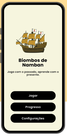
IEER Namban